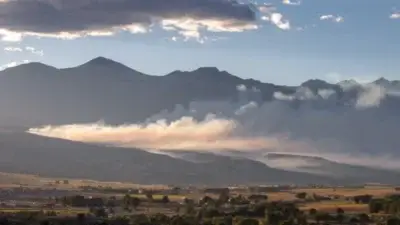

Sunlight engulfs the snowcapped Front Range in a pinkish light as I head down the two-lane highway toward the canyon. Traffic is light this morning, as the fall chill tends to sort out fair-weather anglers, kayakers, and tubers who usually compete for space on the river during summer. And football season keeps people inside to watch the games on TV.
The sight of golden aspens and evergreens lining the river and set against the blue sky remind me why I live in Colorado. I know the trout are feeding aggressively as they prepare for the long winter — it’s a perfect day to fish.
Streamflow tends to be lower in the fall, and water is typically gin clear, revealing big rocks and other structures at the bottom. The low flows and cooler temperatures kill weeds that usually grow thick in the warmer months, which means fewer snags for drifting flies and fewer places for fish to hide. In these conditions, trout tend to hold in deeper water, safe from the eagles and ospreys looking for a quick meal. For the fly-fisher, this usually means nymphing in the deeper runs and pools. But as the sun rises higher in the sky, and the water warms a bit, small midge and mayfly hatches will come, and there will be opportunities to catch trout on dry flies.
Fall bugs tend to be small, so I tie on a size 20 pheasant tail nymph with a red glass bead as an attractor and drop an even smaller midge emerger fly about a foot and a half below it. These tiny flies are only a few millimeters in length, but anything bigger will look unnatural and may put the fish off. There is nothing natural about a fly with a glass bead for a head, but that doesn’t seem to bother trout much. It’s better to be too small than too big.
A length of fluorocarbon tippet added to the end of the leader makes the line nearly invisible in the water — a necessity when the flow is this low and clear. The tippet is no thicker than a human hair, but it has a tensile strength of about 3.5 pounds, which is enough to land most trout, as long as you don’t try to horse them too much.
I quietly approach a pool — stealth is critical this time of year. I cast into the foam line closest to the near bank, and with each successive cast, I work my way across the river, inching closer to the opposite bank.
The first pass across the river doesn’t generate any interest from the trout, so I creep a few steps upstream and raise the strike indicator about a foot to get the fly a little deeper in the water. After a few casts, the indicator suddenly dives. Fish on! The fish takes off in a helter-skelter fashion, back and forth in the pool, but doesn’t try to go airborne to reveal itself just yet. It heads downstream, and I follow it along the bank, applying sideways pressure to work the fish downstream toward still waters where I can net it.
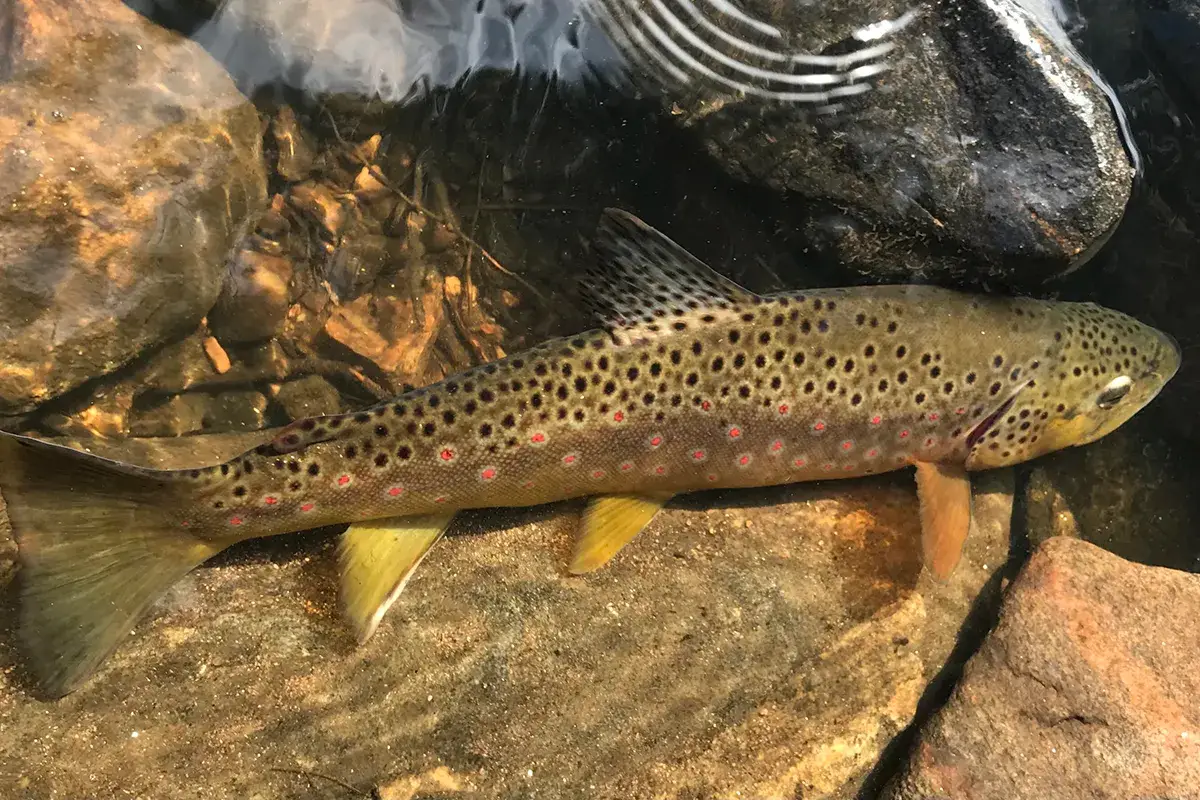
It is a beautiful brown trout in fall spawning colors — buttery brown and yellow sides with deep red and black spots. My tiny pheasant tail is fixed firmly in the corner of its mouth. I pinch the barbless hook between my thumb and slip it out of the trout’s mouth. As I dip the net into the water, the fish skitters away, back to the depths of the pool. It is a good start to the fall fishing season.
Craig Johnson is an outdoor enthusiast who enjoys fishing, hiking, and exploring all Colorado has to offer.