

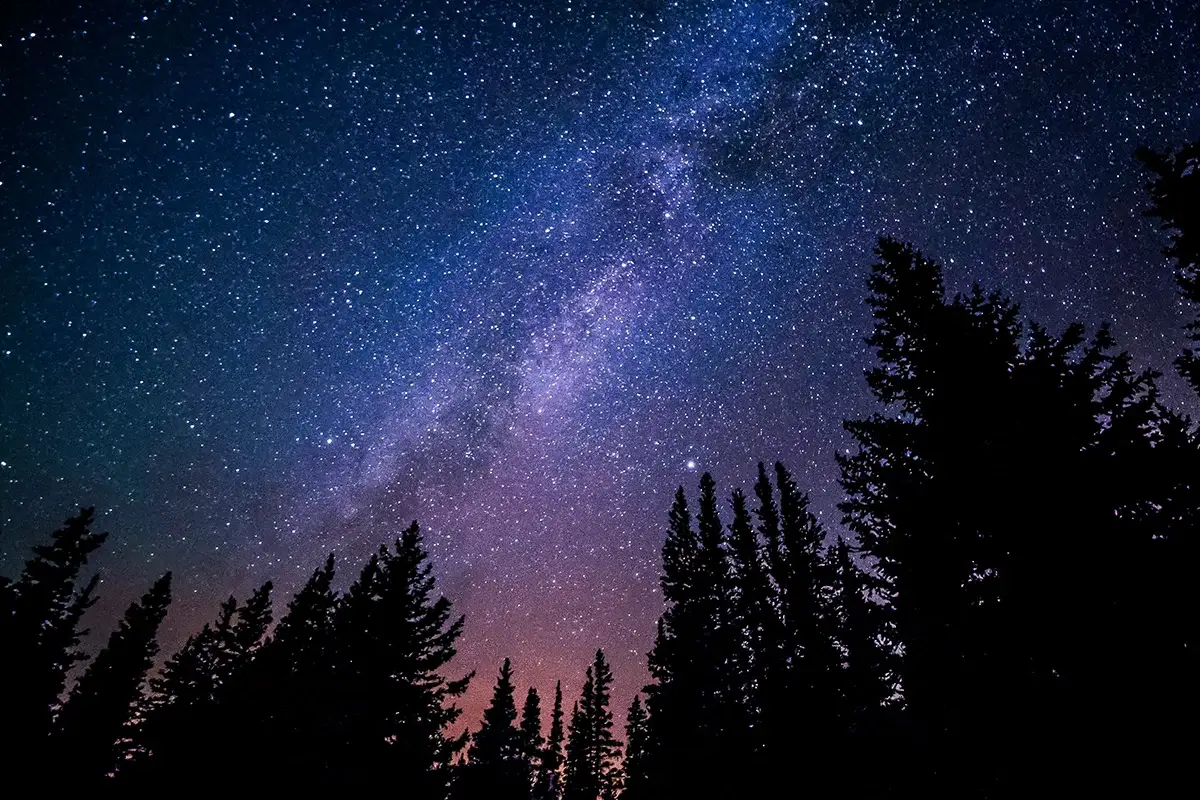
“Can you find the North Star?” I asked my daughter Casey, 7 years old at the time. “Look, there’s the Big Dipper, then followthose two on the end up into the sky, and there, see that bright one? That’s it. And see those three that look like a belt? That’s Orion…”
What parent hasn’t proudly uttered those twin-kly words of wisdom to their offspring, cementing their status as either the world’s biggest dork or a genius shining as brightly as the stars overhead? For my daughters and me, these moments most often come on river or backpacking trips, when city lights are far removed and the nighttime sky opens up like our imaginations.
While my celestial knowledge is as fleeting as those moments with my daughters, luckily, such information is now easier than ever to gain and pass along, with a string of stargazing apps designed to make parents seem smarter than they actually are. Bless the stars, we’ve also rounded up two apps to help you take photos of the twinklers overhead.
Stellarium Mobile — A great, free all-around choice for beginners, this one lets you point your phone at the sky to identify stars, planets, constella-tions, satellites, and deep-sky objects. It’s also good for planning photography sessions.
SkySafari 7 — Excellent for serious stargazers and telescope owners, this app offers advanced astronomy and telescope features, with detailed sky simulations and observation planning.
Star Walk 2 — Known for its great visuals, this beginner-friendly app is known for its great augmented reality visuals and constellation artwork.
Night Sky — Popular on Apple devices, this stargazing app features augmented reality views and detailed information about celestial objects.
Sky Tonight — Great for planning what to observe on a given night, including meteor show-ers, International Space Station passes, and planet visibility.
Star Photography Apps
Want to take pics of the nighttime sky? Try these two photo apps:
PhotoPills — Widely used by astrophotographers for night-sky shoots, this app helps you find the best time and location to photograph the Milky Way, star trails, meteor showers, and other celestial events. Bonus: an augmented reality tool makes composition and timing easier.
Sky Guide — This app is known for its beautiful interface and sky maps. Simply point your phone at the sky to identify stars, planets, constellations, and satellites for your images.
Tourism Office Debuts New Stargazing Trail Map
Want to know the best places in Colorado to see stars? During June’s Colorado Dark Sky Month, the Colorado Tourism Office unveiled its new Colorado Stargazing Trail, a free trail map and website highlighting Colorado’s nighttime sky. It’s a guide to the state’s certified Inter-national Dark Sky locations, where constellations are most clearly visible. “Stargazing is accessible and can be done by anybody,” maintains director Tim Wolfe, adding he hopes it will inspire other municipalities to pursue dark sky certifications. “We thought that putting this all under one trail will help people see the different oppor-tunities all over Colorado.” Many stargazing locations are marked along or south of Interstate 70, including Breckenridge, Colorado’s first International Dark Sky Certified ski resort town. Colorado is currently home to 13 International Dark Sky Parks and eight International Sky Communities, and we lead the world with more than 30 locations — including 12 state parks — that are in the process of earning their certification. The website also features stargazing events, tours, guided trips, and other night sky programs. Find more information online at colorado.com/colorado-stargazing-trail.
Eugene Buchanan is an award-winning author whose work has been published in The New York Times, Men’s Journal, Outside, National Geographic Adventure, and more. He lives in Steamboat Springs.