

Students gain more than a degree at Western Colorado University
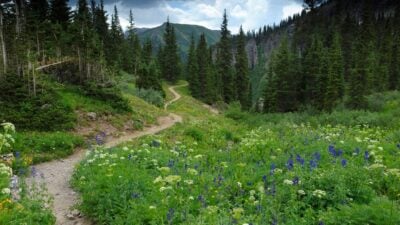
Brad Tabor’s broken body came to rest at the bottom of a steep section of rugged trail, deep in the backcountry of Gunnison County. One minute he was riding his off-road motorcycle up the dirt single-track, working his way around roots and rocks. The next minute, he lost his balance, put his foot down to catch himself, and felt his knee buckle with a sickening crunch. Brad was thrown from his bike, tumbling backward downhill. When he finally rolled to a stop, searing pain shot through his right leg. He was alone and badly injured, lying prone on an exposed mountainside at 11,000 feet above sea level. To make matters worse, storm clouds gathered overhead.
“I realized I was in big trouble,” Brad said.
Unable to put any weight on his leg, he crawled upslope to his fallen dirt bike, grabbed his two-way GPS satellite device, and triggered an SOS distress call. Raindrops began to fall.
With temperatures plunging and daylight fading, Brad hunkered down in the rain, trying to stay warm under his backpack. But as the storm intensified, his clothes quickly soaked through. Hail pelted his injured body. He shivered uncontrollably.
Then Brad heard sounds in the distance that gave him hope. Voices calling his name, faint at first, then growing louder. They were the young, confident voices of Western Mountain Rescue Team based out of Western Colorado University in Gunnison.
WESTERN MOUNTAIN RESCUE TEAM
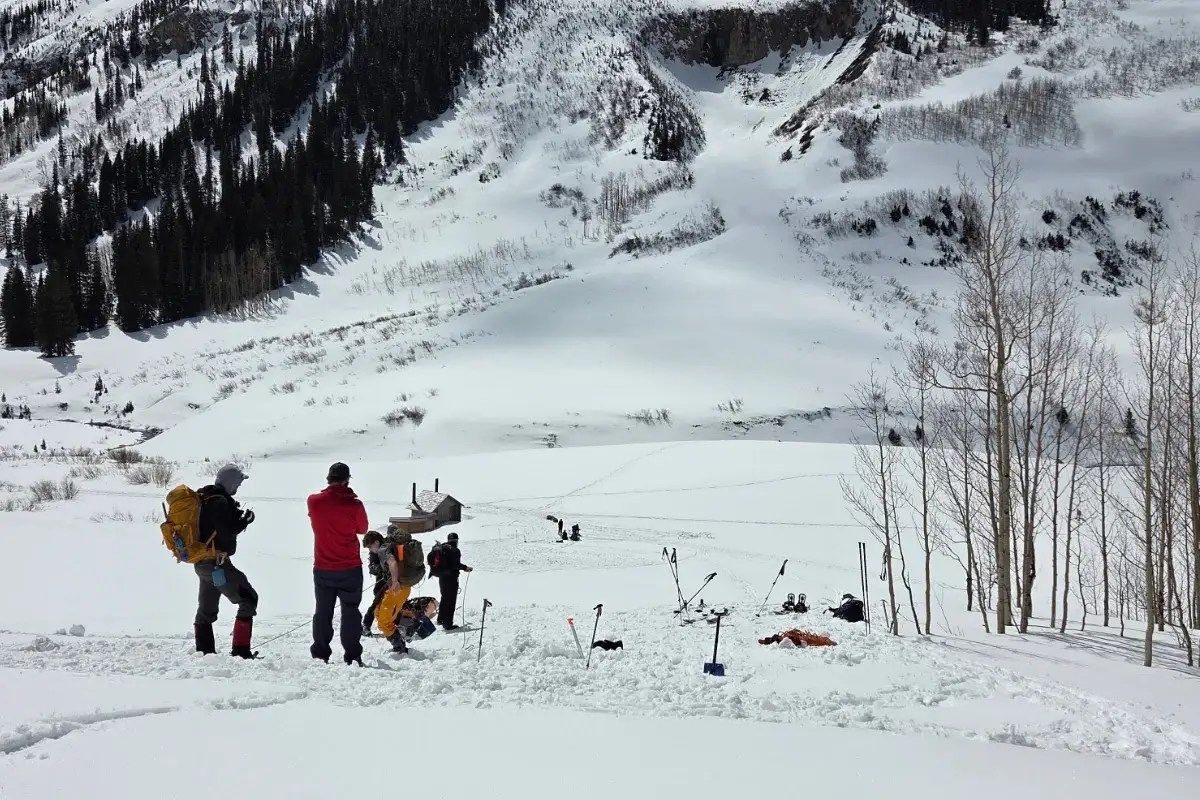
Formed in 1968 after a group of Western students organized a search for a missing professor, WMRT is now the largest search and rescue — SAR — team serving Gunnison County.
Like all 50 SAR teams in Colorado, WMRT falls under the authority of the local sheriff’s department, often collaborating with emergency services to assist and evacuate people from remote and rugged terrain. WMRT averages roughly 40 rescue calls per year.
It is also the only student-led, collegiate SAR team in Colorado and the only such team in the United States accredited by the Mountain Rescue Association, an organization that represents the gold standard for search, rescue, and mountain safety education.
YOUTH IS AN ASSET
Gunnison County Sheriff Adam Murdie deeply appreciates WMRT’s finely honed skills and its long history of serving the community. Spanning 3,260 square miles, Gunnison County’s large and diverse landscape makes responding to 911 calls “a geographical challenge, to say the least,” the sheriff said. He oversees three SAR teams in his jurisdiction, including WMRT, which boasts 35 to 50 active members on its roster at a given time. It’s also a team he uses frequently.
According to the sheriff, WMRT is one of the best technical teams in the state, specializing in large-scale wilderness search, high- and low-angle rope rescue, avalanche and winter rescue, and more. “I often get requests [from other agencies] to utilize them outside of Gunnison County.”
When asked about the median age of the young team, the sheriff replied, “Their youth, their strength, and stamina is an asset out there.”
Although WMRT reports to Sheriff Murdie, the team is housed and partially funded by Western Colorado University, where the team remains affiliated as a student service club.
COLLEGE IS MORE THAN A DEGREE
McKenzie McConnell, a senior at Western, joined WMRT as a freshman in fall 2022. “I didn’t have any rescue skills. It was all completely new to me, and that’s how it is for a lot of people.”
That perspective serves McKenzie well as a WMRT mission coordinator and as its all-important training coordinator, making sure each team member is well prepared before they ever go on a call.
“We train to MRA safety standards, so our training schedule is very rigorous,” McKenzie said. Lives depend on it.
According to McKenzie, the biggest challenge for WMRT is team turnover. “It’s tough because students eventually graduate, so training has to be on point. Our timeline for getting people fieldable — up to rescue standard — is condensed, so we expect a lot from our team members while they’re here.”
This doesn’t mean training is rushed. It means training is intense, structured into a two-year program built around fall and spring semesters. In addition to their regular coursework, student members of WMRT attend weekly SAR lectures, receive medical instruction every other week, and perform overnight field trainings monthly. New members often log more than 200 volunteer hours during their first year on the team.
While WMRT is mainly student based, community members are welcome. McKenzie appreciates their perspective.
“They bring more understanding and life experience to our younger team,” she explained. “In many ways, younger people are still developing, still maturing. Our older members tend to have a more careful way of doing things.” She said community members lead by example and show student members that sometimes applying a slower, more methodical approach is better.
When McKenzie graduates in May with a degree in recreation and outdoor education, she will also leave with invaluable lessons learned during her four years of volunteering on the Western SAR team. “WMRT built my confidence with the basic skills of rescue, but it’s more than that. My critical thinking skills have been heavily developed on this team. I also gained more confidence as I moved into leadership roles.”
McKenzie added, “After graduation, I’m thinking about going into emergency services management.”
A CAREER-BUILDING EXPERIENCE
Ryan White, Deputy Emergency Manager and Emergency Preparedness and Response Coordinator for Gunnison County, is a prime example of how a student can leverage their SAR experience into a rewarding career.
As an incoming freshman in 2010, Ryan chose Western Colorado University over other schools across the country because of the strength and reputation of its SAR program. The service-oriented team environment really spoke to him. “It’s the story of many,” he said.
As the volunteer Director of Operations for WMRT, Ryan’s role is to “standardize our curriculum, foster leadership development, share institutional knowledge, and — above all else — preserve the spirit of the organization, which should always be student-led.”
There’s “a big misconception that WMRT is a bunch of kids playing rescue,” Ryan commented. Nothing could be further from the truth. MRA reaccreditation is intentionally tough, which serves the team well. And Ryan believes in the robust systems WMRT has built over time. He’s also confident in how the team’s highly trained mission coordinators, like McKenzie, lead their volunteer crews during emergency responses in extreme environments under pressure. “These students who lead missions are amazing, capable decision-makers in the field. I’ve seen it. I trust them.”
According to Ryan, his experience on WMRT directly impacted his career path. “Because of my mentors, and the right opportunities, I am where I am today. I get to be the Deputy EM for Gunnison County, which allows me to contribute back to the community that gave me those opportunities.”
His career trajectory and pay-it-forward mentality are not unusual for WMRT alums.
Scott Morrill joined the Western team as a student in 1978. After a 36-year career in public safety, Scott recently retired as the Director of Emergency Management for Gunnison County. “Joining the rescue team is still the best decision I’ve ever made,” he said. “I made lifelong friendships, and it paved the way for my entire professional career.”
Scott estimates that 75% of WMRT student members move on to some form of public safety career after graduation from WCU. Today, alums enjoy successful careers in emergency management, in state-level SAR management, as rescue rangers at national parks, and expedition guides around the world.
“The idea that a bunch of young people — most just teenagers out of high school — are willing to put themselves at risk to help others, take time out of their lives to go on these intense trainings, pay for their own gear out of pocket, and be on call 24/7,” Scott said, “that’s what makes these students special.”
POST-RESCUE REFLECTION
Brad Tabor thinks his rescuers from WMRT are special, too. Back home in Texas, he has fully recovered from his dirt bike accident. Brad’s love of riding in the Colorado mountains hasn’t waned, and he often thinks about the amount of effort it took WMRT to rescue him in the high country that fateful day.
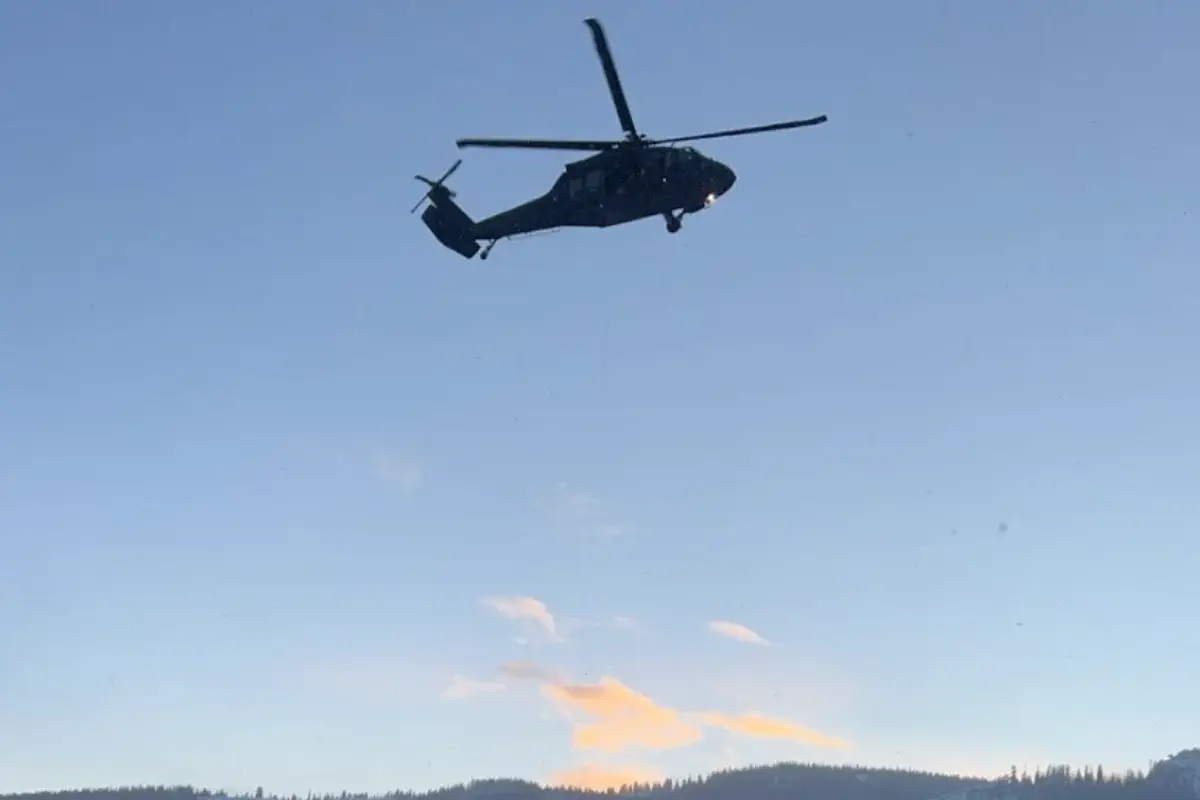
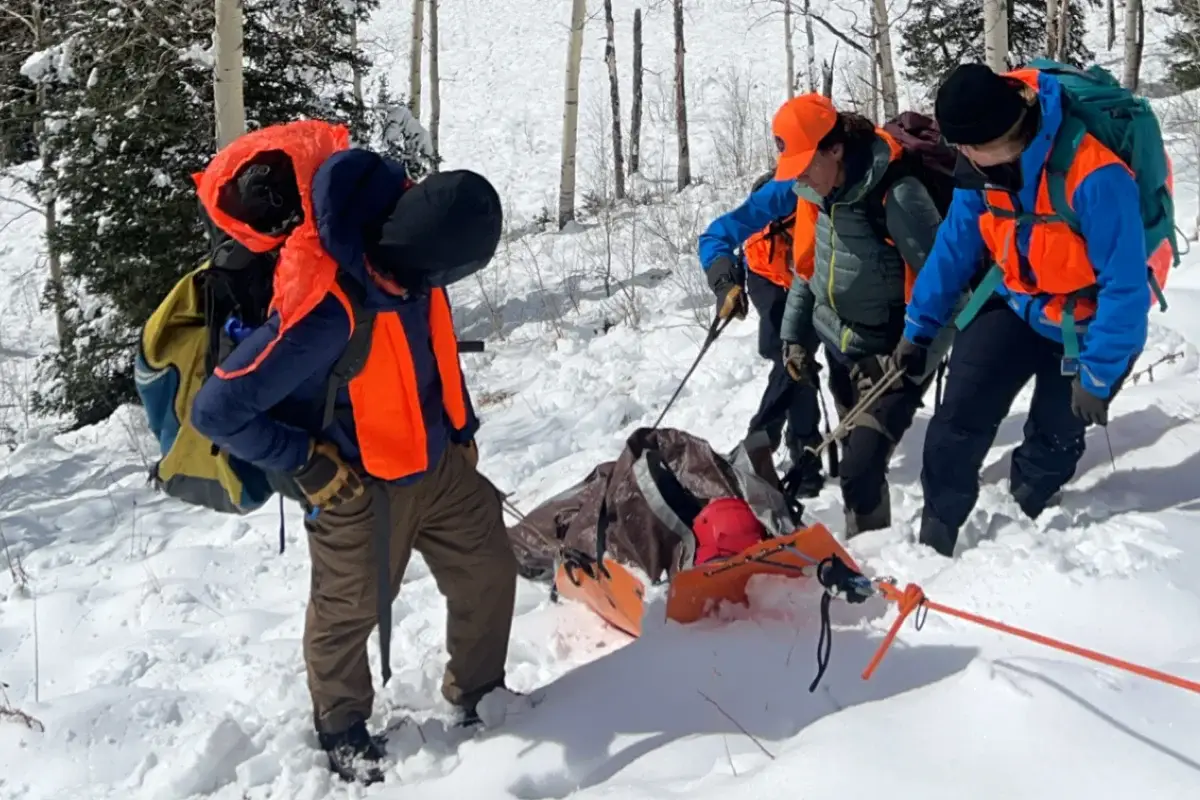
To reach him, the team hiked four steep miles while hauling a transport litter and heavy medical supplies. Once on scene, they assessed Brad’s injuries, wrapped him in a warm sleeping bag, scouted landing zones for the helicopter, loaded Brad onto the litter, carried him across mountain terrain to the extraction point, and handed him off to the paramedics aboard the chopper.
While Brad’s late-summer rescue was difficult, a snowy winter rescue is often harder, requiring more time, energy, and special equipment. Poor visibility, icy roads, and avalanche conditions can make winter extractions far more complex and dangerous for SAR teams like WMRT. But because of their frequent and rigorous training at elevation, the rescue team works like a well-oiled machine regardless of conditions. The students — tough, devoted, and exceptional at what they do — made Brad’s arduous medical evacuation look easy.
“Their professionalism and kindness were astonishing,” he recalled. Brad is still overwhelmed with gratitude more than a year later. After he was taken to a hospital by helicopter, he knew the WMRT ground crew faced a long hike out, carrying not only their own gear but Brad’s as well. “I couldn’t thank them enough.”
He also knows free rescues like his cost WMRT money.
So every year on his birthday, Brad asks for what he considers the perfect gift — donations made to WMRT through the Western Colorado University Foundation. “If it wasn’t for WMRT, I might not be here,” he said, marveling at the students’ selflessness.
“They are real heroes,” he said. “They exemplify bravery, compassion, and dedication. I am forever changed because of them. I am forever thankful.”
To learn more about Western Mountain Rescue Team, or to make a donation, visit https://western.edu/department/mountain-rescue
Becky Jensen writes from a little cabin on a wild river in Northern Colorado and is the author of No Man’s Land: Unpacking One Woman’s Worth on the Colorado Trail. She’s also a proud member of Poudre Valley REA. You can find her at https://beckyjensenwrites.com
DSC01693: Group Shot – Photo courtesy of Mackenzie Bode, remeMBrance media
20250405: Photo courtesy of Ryan White
IMG_3187: Photo courtesy of Ryan Largent
WMRT: Helicopter – Photo courtesy of McKenzie McConnell