
I still remember my first 14er: a sunrise start scrambling up Long’s Peak in junior high with my older brother, back when my cartilage didn’t mind boulder-hopping scree fields. I summited a few more with Outward Bound, “bagging” 14,082-foot Windom and 14,065-foot Sunlight peaks in the San Juans — complete with a resupply by train — before graduating to do more on my own in college, including an ill-advised winter ascent of Mount Princeton. Later, I got into skiing them, from Pikes Peak to Mount Sneffels, Grays, and Torreys, with a stint in Telluride seeing me summit such classics as Wilson Peak and Mount Wilson. I’m certainly nowhere near to bagging all 52 of them — maybe only halfway. But I’ve learned a thing or two along the way, from bringing moleskin (or at least duct tape) for blisters to monitoring the weather. Luckily, I never got into too much trouble — but here are a few tips to heed before heading into the high country.
- CHOOSE THE RIGHT MOUNTAIN
Not all 14ers are alike. Some are steep and exposed, while others more straightforward. While most have standard routes that aren’t too technically difficult, altitude, weather, and physical stamina can always throw curveballs. Choose one with an easier “walk-up” route with good access and clear navigation — 14,065-foot Mount Bierstadt comes to mind — letting you focus on the altitude and endurance without the technical challenges.
- TRAIN
Get in shape beforehand. A basic level of endurance makes the experience more enjoyable. Even nontechnical 14ers are physically challenging, involving miles of hiking and 3,000-4,000 feet of elevation gain. Begin training several weeks ahead. Mix cardio with strength training for your legs. If possible, incorporate hikes with increasing elevation gain.
- ACCLIMATE TO THE ALTITUDE
Altitude is often the hardest part, making some people feel tired, short of breath, or nauseated. To adjust, try to spend at least one night at elevation before your climb, as many trailheads begin around 9,000 to 11,000 feet. Hike slowly, hydrate well, and listen to your body. Don’t be afraid to turn back.
- PACK SMART & LIGHT
Bring the essentials; pack light, but don’t skip the basics. Wear moisture-wicking layers, including a warm jacket, as temps can drop quickly at altitude. For footwear, bring sturdy trail runners or lightweight hiking boots with good traction. Other key items: water (2-3 liters minimum); high-calorie snacks; sun protection including a brimmed hat, sunglasses, and sunscreen; rain and wind layers; first-aid kit; navigation tools like a map, GPS, or offline app; and gloves.
- RISE & SHINE
Start early, even before sunrise. An early start helps get you off the mountain before weather becomes a threat and you encounter any unexpected delays. Don’t forget a head lamp — hopefully just for the start, not the finish.
- PACE YOURSELF
At 13,000 feet, pace matters more than strength. Take slow, steady steps, especially on steep sections, and take breaks to catch your breath. Also eat and drink regularly, even if you don’t feel hungry or thirsty.
- RESPECT WEATHER & TURNAROUND TIMES
If dark clouds build, winds pick up, or storms appear nearby, turn back. The mountain will always be there another day. Set a firm turnaround time — commonly 11 a.m. or noon — to avoid afternoon thunderstorms.
- CELEBRATE THE EXPERIENCE
It’s the being out there that counts, not the summit. Whether or not you reach the summit, climbing a 14er is a huge accomplishment. Enjoy the experience.
Eugene Buchanan is an award-winning author whose work has been published in The New York Times, Men’s Journal, Outside, National Geographic Adventure, and more. His new book, Yampa Yearnings, was released in December 2025. He lives in Steamboat Springs.
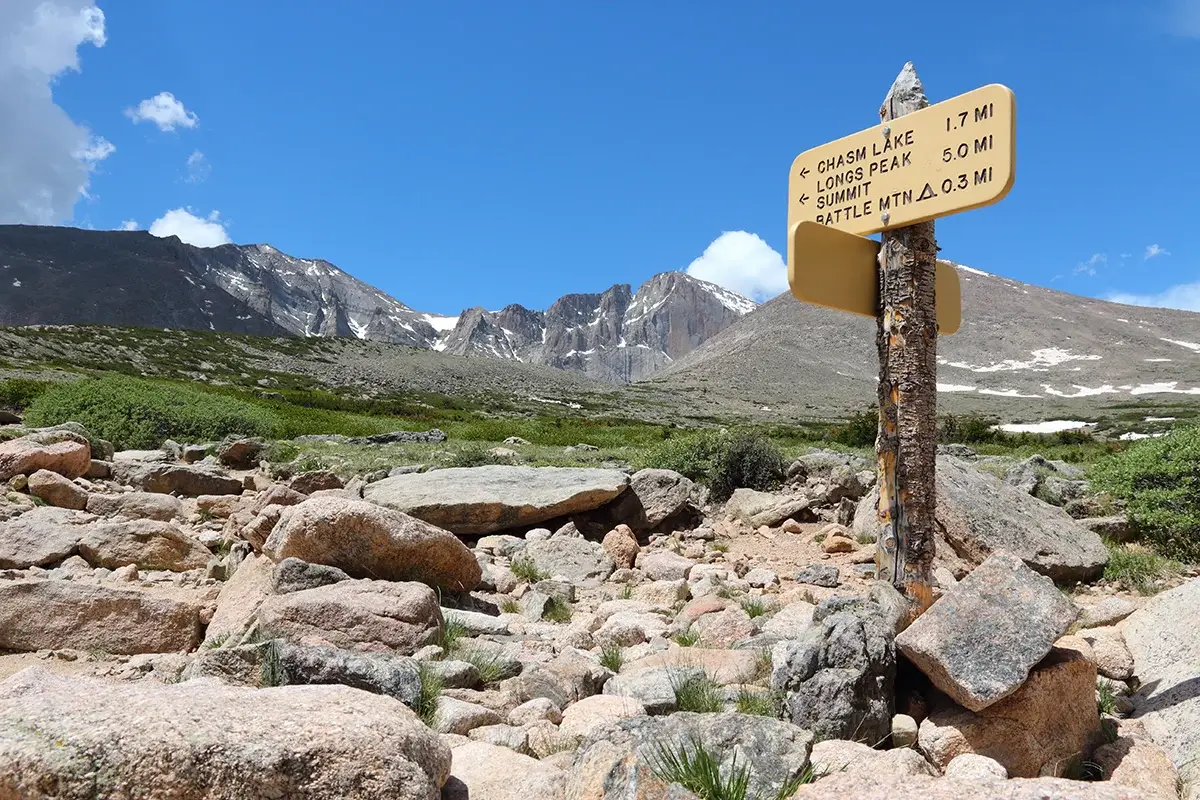
Photo by tupungato/iStock/Getty Images Plus via Getty Images