
Saved historic churches still serve Colorado’s rural communities
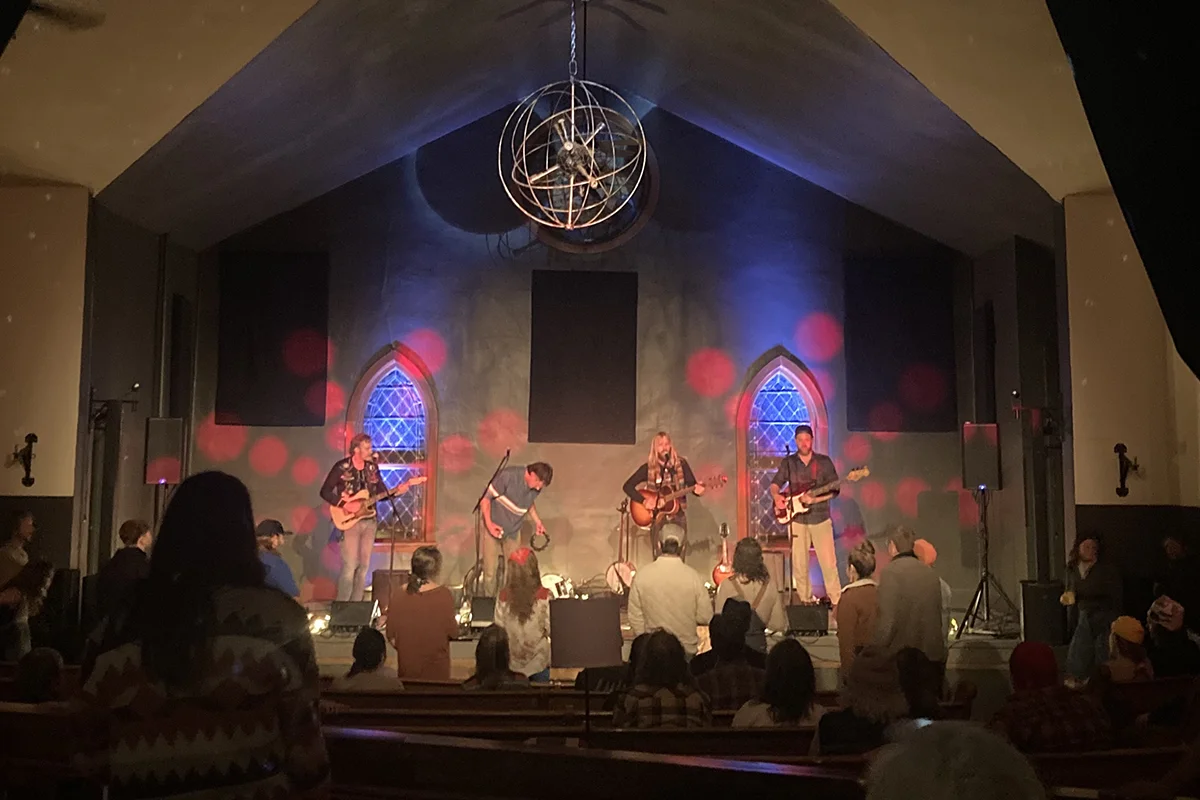
When Salida resident Sheree Beddingfield walked into the historic church building in her small town on a Wednesday winter evening and saw a large audience listening to a talented Celtic band, she thought, “My cup is so full.”
That’s because Beddingfield experienced her hard-won passion project in vibrant action bringing together all types of people in the friendly mountain community to enjoy an affordable and quality performance.
Joyful, upbeat Irish music filled the listening room at A Church — a former Baptist church built in 1885 — as three fiddlers led the ensemble. Some 130 audience members enjoyed the enveloping sounds, while a 5-year-old girl danced in the aisle.
“People will tell me, ‘This is the only place I go to do something social.’ I just think that’s so valuable,” Beddingfield said. “I truly believe people are needing connection and ways to find meaning right now.”
In a town with a population of approximately 6,100, “there’s nowhere else they were going to go” on a weekday evening, Beddingfield said. She enthusiastically pointed to a Sunday night Salida Poetry Spring Equinox gathering in March that drew 120 people.
“There’s not really this [other] community space where a lot of different types of people get together,” Beddingfield noted. “We are providing all of this connection for seniors and young people. They feel comfortable because it is accessible, safe, and friendly.”
A Church board member Rick White said the transformation from an empty church building to a lively community hub and performance space serves a trio of purposes — saving a beautiful historic building, providing a community benefit, and giving artists a place to play.
“It’s a lovely facility,” White said. “We are all very proud of it, and it takes a lot of individuals’ efforts to put this together.”
Work on the old church building started gradually after Beddingfield, a physician assistant specializing in dermatology, purchased the historic location in 2016. The church congregation had moved out and into a larger location in Salida. Beddingfield’s original thought was to section the building into group living spaces for older adults.
Yet, after the first few successful events hosted in the space, a vision of a community-centered facility blossomed.
“I had always had this interest in aging well care, and I just see a lot of people become very isolated and lonely,” Beddingfield said. “But the space totally transformed because we had a communitywide New Year’s Eve gathering. We just had this super fun night, and everybody was like, ‘Oh, my gosh, we need a community space.’”
“About a week later, we lost a really good friend in an unfortunate ski accident, and we had his memorial service there,” Beddingfield remembered of January 2017. “And again, it was just this message of our community needs this space to get together.”
Beddingfield’s former husband who works in construction spent two years on repairs and remodeling the old church, including adding sufficient restrooms, redoing floors, and adding accessible ramps.
A Church has since bloomed and hosted hundreds of events such as eclectic concerts, theater rehearsals and shows, crafting circles, game nights for teenagers, sound meditations, healing circles, parties, weddings, meetings, speakers, comedians, author talks, poetry nights, and open mic nights. More information about the venue and offerings can be found online at AChurchSalida.org.
The mission of A Church is to work to promote connection and provide an open space for nonprofit organizations, civic groups, and individuals working for positive change. In November 2024, A Church became a 501(c)(3) nonprofit to pursue more grants to help even more community nonprofit groups use the space, said Andrea Mossman, manager at A Church.
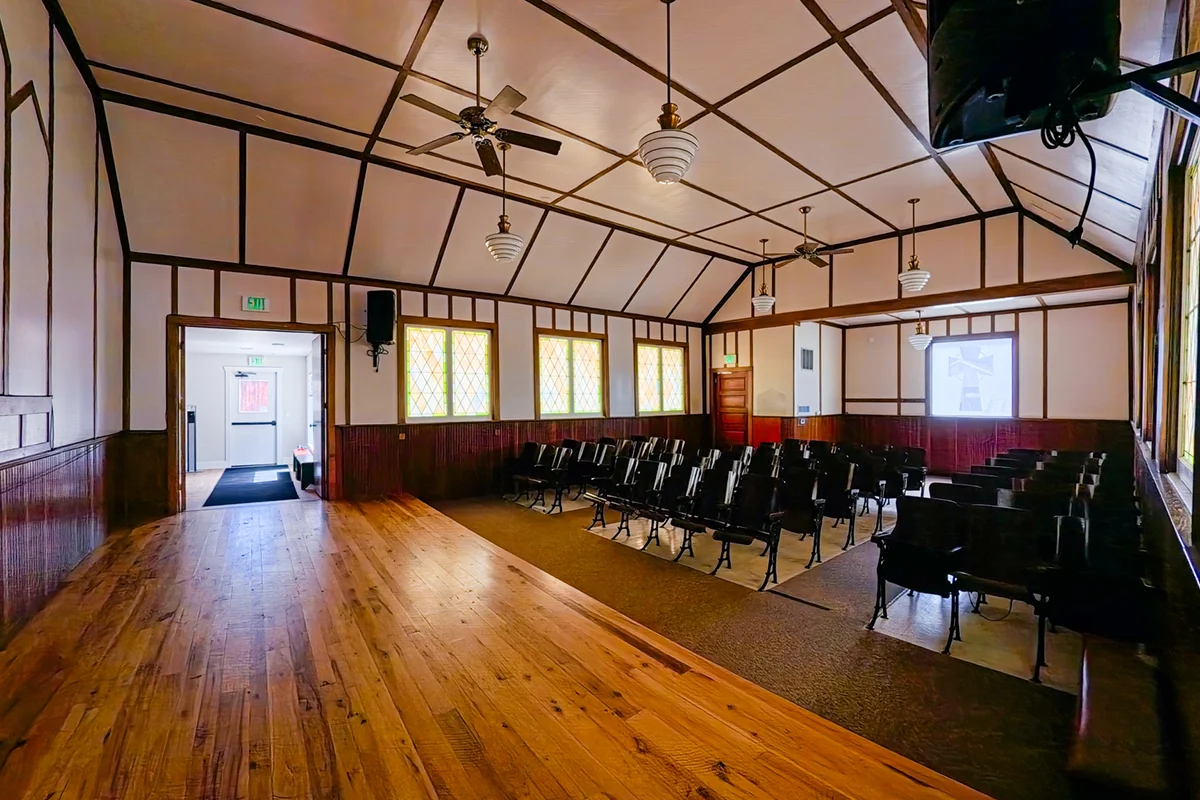
“Especially in rural towns, you really need support for the arts,” said Mossman, a 20-year Salida resident, musician, dancer, actress, and self-described “theater rat.” Mossman said A Church, with its stained-glass windows and sense of history, “just feels very nurturing.”
“It’s a really nice place to perform. It has a great feel,” Mossman said. “We get a lot of people referred to us by other musicians who have come through.”
In fall 2025, the volunteer-led Salida Theater Project became the first resident theater company at A Church.
“It does feel like without A Church we would be without a home,” said Devon Kasper, the theater project’s artistic and executive director. “We are so lucky to have this space in our little town and the kind of music that comes through.”
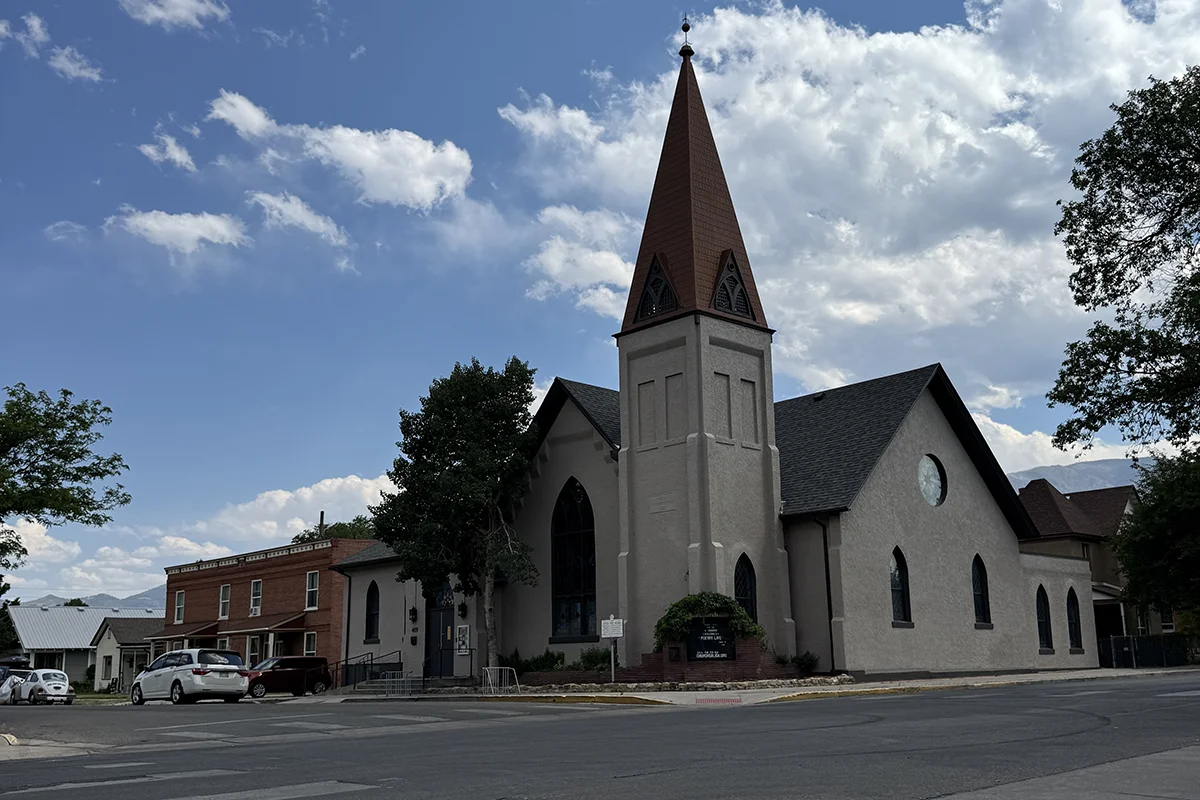
According to History Colorado, A Church at 419 D St. was originally the First Baptist Church of Salida, and construction of the Late Gothic Revival church began in 1885. The First Baptist Church is significant in the temperance and women’s suffrage movements, and the church was approved for the National Register of Historic Places in 2024.
“The church is where the local chapter of the Women’s Christian Temperance Union formed and held regular meetings in the 1880s and where local suffrage activities were held as part of an ambitious statewide campaign to enable women’s right to vote through a popular referendum in 1893,” according to History Colorado.
Damion Pechota, senior national and state register historian at History Colorado, said dozens of historic churches in small towns across Colorado have been transformed from empty or storage spaces into valued centers for community uses. The concept is a throwback to a time when churches in small communities often served multiple purposes as a town gathering place, Pechota said.
“Often the churches were symbols of communities, and so there’s an opportunity for that to continue to be the case,” Pechota said. “We want these buildings to continue to live and be vibrant spaces, that everyone in the community can gather and have these as symbols of communities.”
Colorado is home to many wonderful churches in rural areas, the historian noted, yet multiple old churches have been turned into family homes or are only sitting used as storage buildings.
Pechota said History Colorado helps to preserve historic buildings but also focuses on people-centered programs.
“Having them as community spaces is really the goal that we’re working toward, and what we really want to see is these buildings be used in new ways,” Pechota said. “I think the greatest benefit is that it keeps the historic building and the historic stories alive. It’s important because of the people who came before us, and so it keeps those stories alive.”
As a state government agency, History Colorado offers multiple programs such as the State Historical Fund to help groups preserve historic churches and buildings. That funding awarded approximately $12 million in competitive grants during 2025. The funding aims to identify and complete essential statewide preservation projects that benefit Colorado’s communities, cultures, economies, and the environment.
Other helpful programs, with information available via HistoryColorado.org, include National and State Registers, preservation tax credits, and Colorado Heritage for All.
“The buildings come with challenges, and the state is here to help support those challenges, whether through funding opportunities or just through support or getting the word out,” Pechota noted.
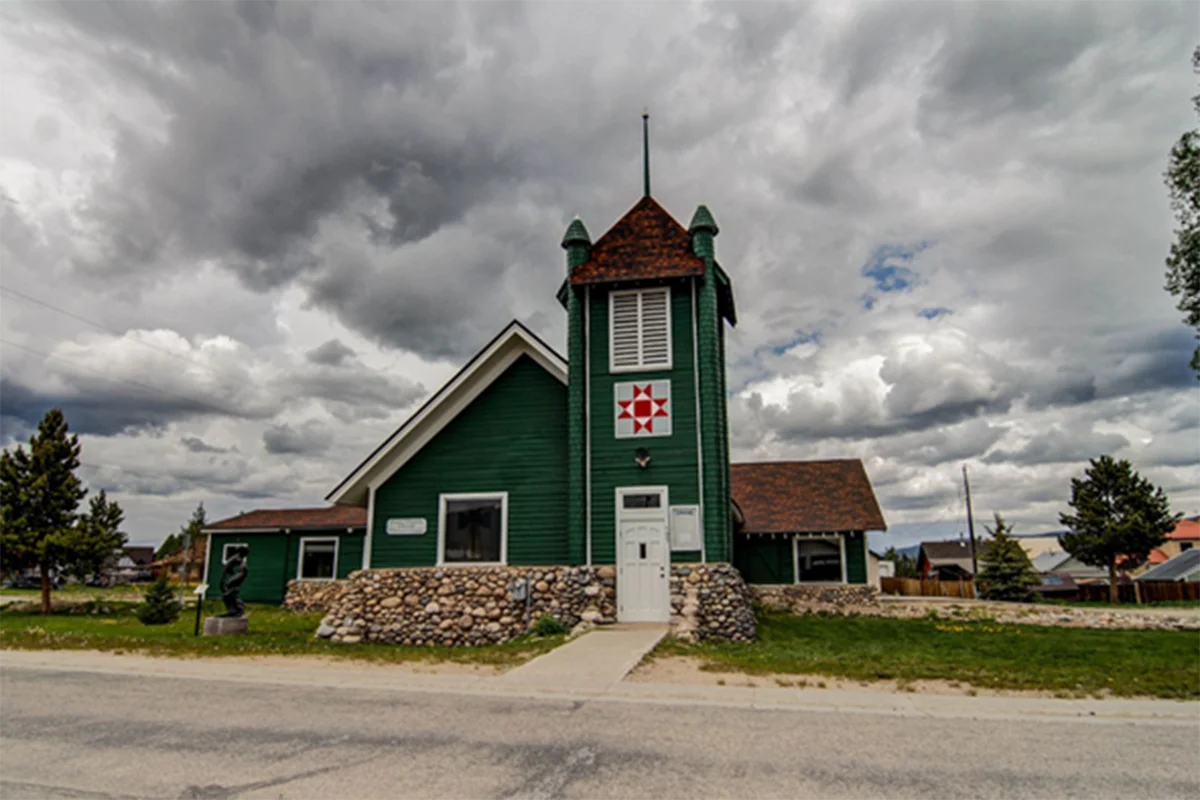
Across Colorado, from Alamosa to Fraser to Manitou Springs, shuttered former churches have been converted to community centers to give the sacred spaces new life, preserve the beautiful old buildings, and provide needed spaces and services in small towns.
The former Christian Science Society building in Alamosa, built in 1922, was saved by passionate citizens. A group of like-minded individuals in the city of some 9,950 people banded together to acquire the building and create the nonprofit Society Hall Foundation in summer 2015. The auditorium has since hosted a wide variety of events including concerts, plays, workshops, weddings, memorial services, meetings, and film festivals.
“We have tremendous community support; it’s awesome,” said Ruthie Brown, a member of the all-volunteer Society Hall board.
The renovated space in Alamosa, with a schedule online at SocietyHall.org, frequently hosts musical performances featuring folk, roots, country, acoustic, Americana, and singer-songwriters.
“It never fails to amaze me the level of entertainment that comes through our beautiful little listening room here out on the wild frontier,” noted the Society Hall newsletter from March, “And the performers love it. Virtually everyone says how much they love the room, and the people who come out to be there.”
St. Andrew’s Episcopal Church that was founded in 1870 in Manitou Springs, a town of about 4,800 people, is now St. Andrew’s Community Center. The goal of the center is to become a “place of connection, compassion, and collaboration, where volunteers can engage deeply, hear new stories, take on meaningful challenges, and stay hopeful about our shared future,” according to the community center’s website at StaccManitou.com.
Back in Salida, out-of-town visitors who happen upon one of the varied, entertaining concerts at A Church — including Appalachian, Balkan, and Venezuelan music — will find a comfortable, welcoming, and uncrowded environment. Guests may encounter a sociable local music promoter with his friendly dog on hand for the show, and listeners can give a donation for a bubbly cold drink in the refreshment cove in the back of the former chapel.
Although the board of A Church hopes to secure more grants, including for a much-needed new boiler, the nonprofit organization currently is supported through memberships, business sponsors, and rent from four affordable housing apartments in the basement. Admission to performances stays affordable, on average at $25.
As the chief benefactor for A Church, Beddingfield is proud of her contribution to creating a community space where people come together to find connection instead of staying at home and watching television.
“Without this being her passion project, I’m not sure it would work,” board member White noted. “She has a very strong commitment for the events that happen there and how healthful they are for us as a community.”
Beddingfield laughed when she talked about her life living in the small town while supporting A Church.
“I drive a crappy car. I live in a small house, but I have a great life,” Beddingfield said with a chuckle. “I like to ride my bike. I get my clothes at a thrift store. I’m happy.”
“It feels good to have created something that I feel impacts people’s lives in a really positive way,” she said. “It’s inclusive for everybody. My vision was if you have something cool to share with the community, bring it here; we will give you space.”
Suzie Romig is a degreed, award-winning journalist who lives near Steamboat Springs and has lived, worked, and explored in Colorado since 1990.
“A Brother’s Fountain” photo courtesy of Mike Rosso
Inside Fraser church photo courtesy Town of Fraser
Outside Fraser church photo courtesy Town of Fraser
Emily Barnes with group photo courtesy of Mike Rosso
A Church photo (IMG 2086) courtesy of Kylee Coleman