
Last month, we looked at the basic structure of an electric cooperative, a not-for-profit utility owned by its members and governed by a member-elected board. We explored how this governance model — reflecting the Democratic Member Control principle — shapes every aspect of a co-op’s operations. And we looked at how the Cooperation Among Cooperatives principle is put into action by co-ops when they mobilize to help a sister co-op recover from a fire or other disaster.
This month — which happens to be National Co-op Month — we’ll dig into how co-ops breathe life into other cooperative principles: Education, Training, and Information and Concern for Community.
CO-OP DIRECTORS VALUE EDUCATION AND TRAINING
Running an electric cooperative is a complex endeavor where the stakes are often high, and the challenges are constantly evolving. “The electricity business is complicated, and major shifts are going on now, such as the transition from fossil fuels and the growth of electric vehicles,” said former Sangre de Cristo Electric Association board member Jeff Fiedler. (Fiedler now works as associate director for regulatory policy for the Colorado Energy Office, but he spoke to Colorado Country Life as a private citizen, not representing his employer.)
“As board members, we need to understand what’s going on in the larger realm of the electric power world, including policies from the Colorado legislature and federal government,” echoed Bryan Ehrlich, a board member of Poudre Valley Rural Electric Association since 2018.
And in addition to the power grid’s complexity and shifting state and federal policies, co-ops are contending with growing risks, especially in cybersecurity. “There’s a real need to invest more in robust cybersecurity,” said Jim Riggins, a director of Mountain View Electric Association. “We’ve seen small rural co-ops hacked by nation-states, so we know this is not theoretical.”
Co-op directors receive extensive training on issues like this as well as their everyday operational, financial, and management responsibilities. “I was amazed by the level of training I received as a board member,” said Fiedler, crediting the National Rural Electric Cooperative Association, Colorado Rural Electric Association, and Tri-State Generation and Transmission for providing rigorous training.
But if co-op directors had a wish list, at or near the top would be more engagement and participation from their member-consumers. “I wish more of our members had a better understanding of what it takes to deliver electricity to them,” said Ehrlich. “Educated and engaged members make the co-op stronger.”
To foster more member engagement, PVREA and other co-ops get creative with public events and outreach. San Isabel Electric Association hauls its own food trailer to various locations throughout its service territory to serve free hot dogs to members. “The free hot dog days create informal opportunities for members to ask questions and share feedback about their electric service in a relaxed atmosphere,” board president Jacque Sikes said.
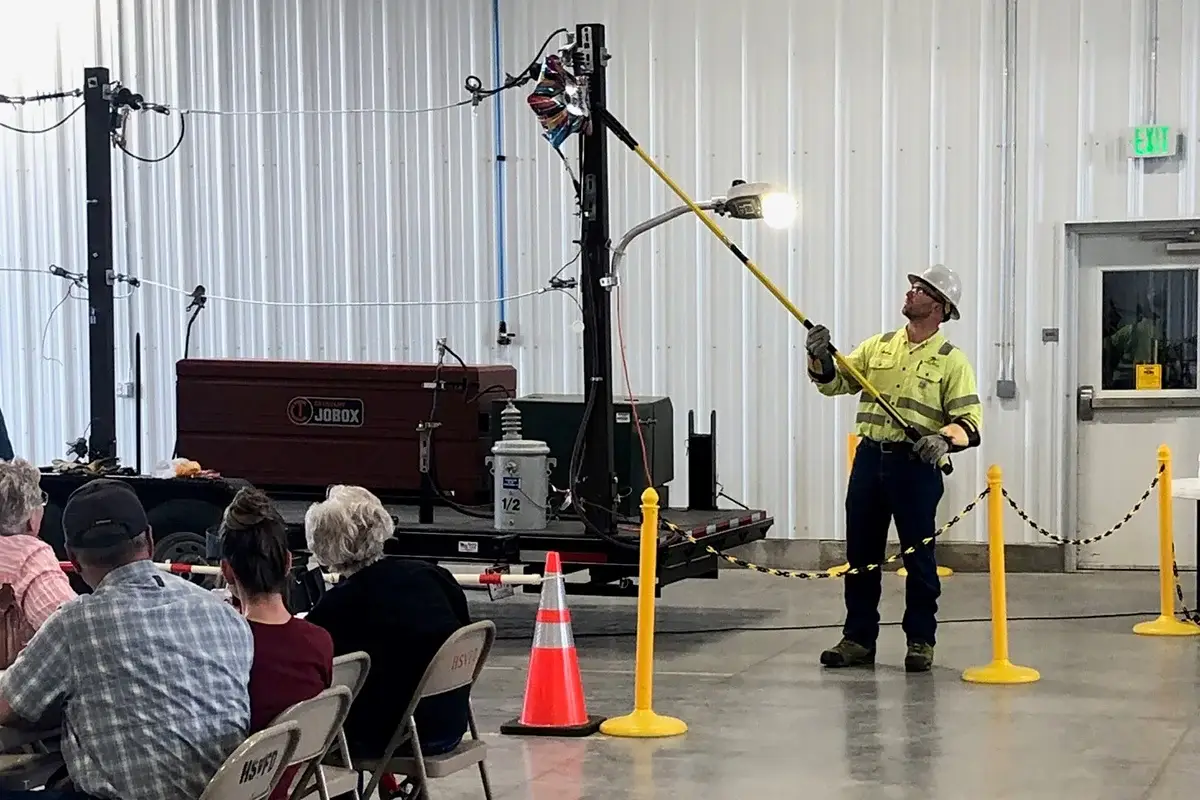
Morgan County REA holds a member appreciation picnic every June, with staff cooking and hosting. A main attraction at this event and others hosted by MCREA is the show put on by linemen using the co-op’s electric safety demonstration trailer. “They’ll draw an arc flash from the energized wire, showing how powerful electricity is,” said Maddie Pollart, manager of member services. “It’s very loud and bright, capturing the attention of the audience. It really is shocking, so to speak, driving home messages about avoiding downed power lines and never tampering with electric equipment.”
RATE CHANGES RAMP UP NEED FOR EDUCATION
For many cooperatives, education priorities encompass more than teaching people how to stay safe around electricity. Several Colorado co-ops have implemented or are implementing new rate structures that adjust costs to their consumer-members depending on when they use electricity. While these changes are the result of careful studies and in-depth discussion by co-op leaders, they can be hard for members to understand and adapt to.
“To make this as easy as possible for members, our staff began a major education and outreach effort many months ago,” Riggins said. Outreach includes a series of town hall meetings, articles in this magazine, a smartphone app, and other methods.
“We want members to feel they’re empowered to have more control over what they’re spending on electricity, and education is key to that,” Riggins commented.
CONCERN FOR COMMUNITY — NEAR AND FAR
Aside from serving consumer-members with reliable, affordable electricity, co-ops also serve their communities with scholarship funds, community donations, space for public meetings, and many other ways — all putting the Concern for Community principle to work.
Mountain View Electric, for example, offers Operation Round Up, a co-op program in which members opt in to have their bill rounded up to fund a giving program. A member’s contribution “comes out to about $9 or $10 a year at the most,” said Joe Martin, an MVEA board member for almost 40 years. “In addition to local nonprofits, the independent Round Up board also donates to individuals in need.”
Scholarship programs are also common at co-ops. Grand Valley Power, for example, uses unclaimed capital credits (explained next month in part three of this series) to help fund scholarships for students pursuing college, technical education, or lineworker training. For one longtime scholarship committee member, giving is as rewarding as receiving. “It helps me feel more a part of the community,” said Ruby McCall, a retired educator who has worked on GVP’s scholarship committee for 11 years.
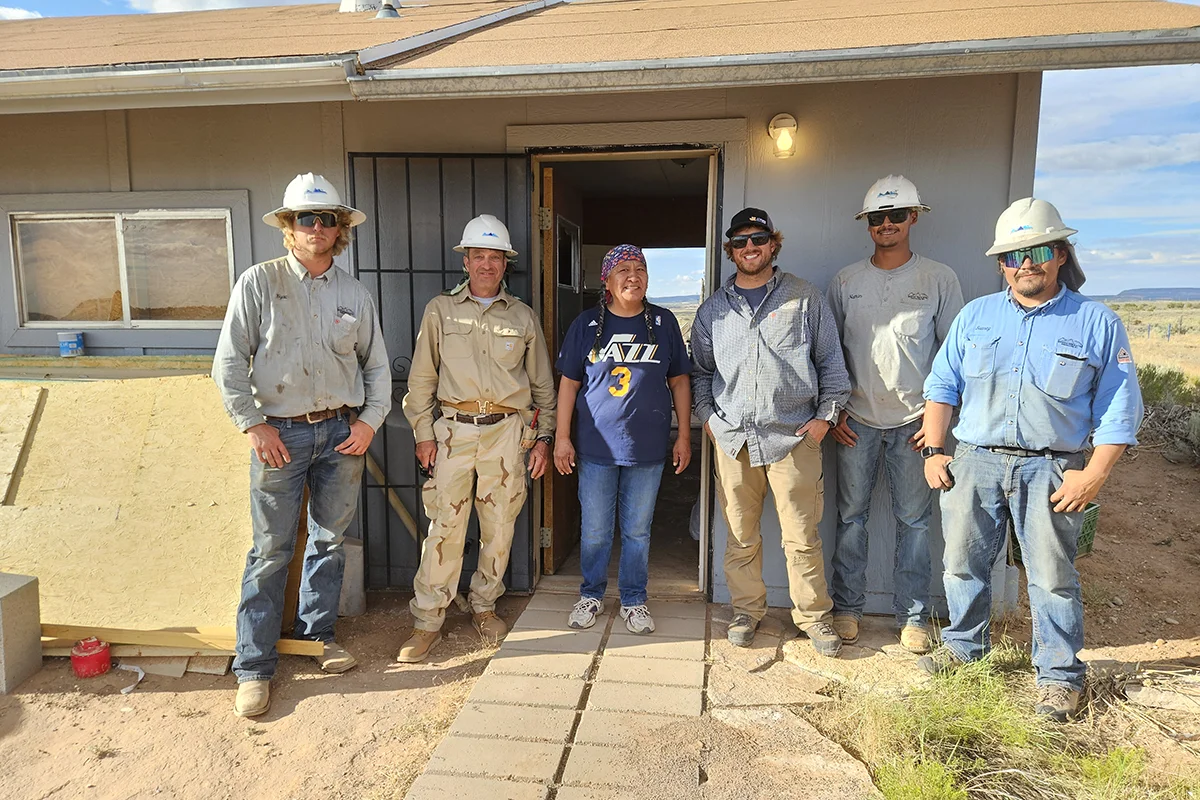
Concern for community can also extend far beyond a co-op’s own service territory. For the past three years, MVEA has sent volunteer linecrews to participate in Light Up Navajo, an effort by electric power utilities to extend electricity to homes on Navajo Nation.
MVEA board member Jim Riggins and four MVEA linemen were deeply moved last summer when they watched an 80-year-old Navajo couple cry with joy as they turned on an electric light in their home for the first time. “Our rough-and-rugged linemen also started tearing up when they witnessed the results of their work,” Riggins said.
And that work was anything but sentimental. Temperatures reached 102 degrees. Some pole holes took more than three hours to drill through solid rock. Crews worked 13-hour days.
Yet they kept going. “We’re going to finish this job,” Riggins recalled the linemen saying.
LUN 2025 MVEA courtesy of MVEA
MCREA hotline demonstration courtesy of MCREA
Jim Hight is a writer, research analyst, and consultant based in Buena Vista.