
A look at the Coloradans working together to rethink the whole animal
A decade ago, most Colorado ranchers could not give away beef tongue.
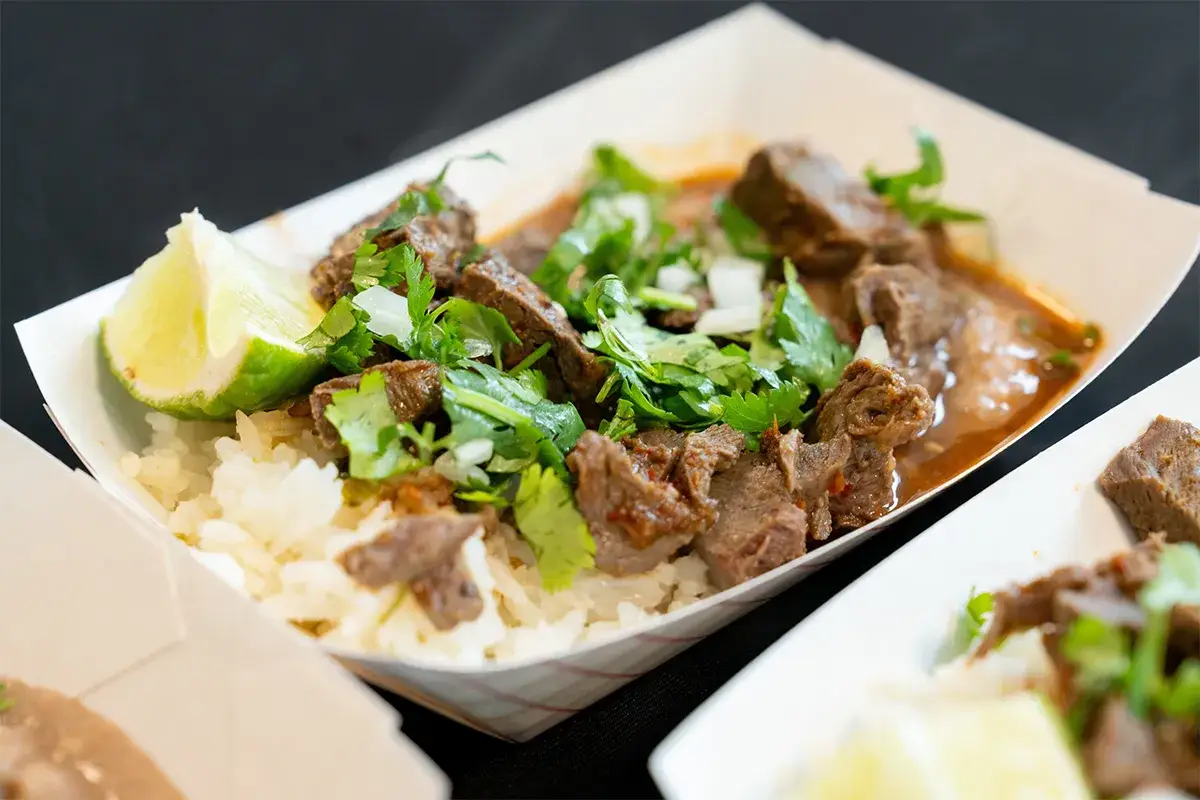
Now with the acceptance of the tender, flavorful meat in tacos de lengua, the price of beef tongue is more than $6 a pound, making it worthwhile in processing labor costs. That’s a good thing for advocates who are working to reduce waste in the livestock production industry and helping to boost Colorado agricultural producers.
“Ten years ago, you couldn’t give it away, and now I actually have to beg to get it from my processors who have tongue because they can sell it for a good price,” said Jordan Kraft Lambert, director of ag innovation and partnerships at the Colorado State University Spur center north of downtown Denver. “Tongue is like the poster child of what we want to happen with all organ meats.”
Beef tongue is just one example of a growing list of products that are being saved from the meat-processing waste stream for use by Colorado entrepreneurs and small-business owners. The official name of that often-wasted yet nutrient-dense product is offal, along with other names such as organ meats, offcuts, off-choice, edible by-products, variety meats, ancestral blends, or underutilized cuts. The word “offal” historically stems from the combination of the words “off” and “fall,” referring to the parts of an animal that fall off the butcher’s block or are cast aside as less valuable.
In Colorado, offal is used in popular dog treats, tallow-based skincare products, tallow cooking oil, restaurant or catered specialty dishes, and ancestral blend ground beef that includes 15%-20% organ meats. Offal devotees use collagen-rich chicken feet to make soup broth and capsules of dehydrated organs as health supplements.
Successful Louisville-based pet treat company Winnie Lou, founded by Ashlin Cook, has been using offal for more than seven years, starting with bison heart and liver for dehydrated or freeze-dried dog training treats. The business started with buying from vendors at the Boulder Farmers Market. Winnie Lou has grown from a small food truck in a vintage travel trailer in 2018 with a “mission to take the mystery out of pet treats” to products now sold in some 250 locations across Colorado and roughly 2,500 pet or grocery stores across the United States, Cook said.
Since using bison liver and heart has become more popular, Cook said she now pays $7 to $15 per pound for bison heart when she originally paid $2 to $3 per pound. Now her company produces dog chews made from bison marrow bones, tracheas, scapulas, and tendons.

Partnering for Success
Lambert at CSU Spur is leading a statewide effort to increase the use of offal to help producers’ bottom lines, promote entrepreneurial ag-product businesses, and reduce waste in livestock production. “She’s definitely very helpful in introducing people to ranches and bringing more awareness to offal in general,” Cook said.
“Our role is to understand the problems Colorado farmers and ranchers face, then accelerate partnerships — often between a producer, an ag-tech company, and a CSU researcher — to solve those problems,” Lambert said of the Ag Innovation Center at CSU Spur.
After talking with farmers and ranchers in Colorado, Lambert reports their top expressed concerns start with the fact that “consumers don’t understand us,” followed by water inconsistency, labor shortages, noxious weeds, pests, and diseases.
The work at CSU Spur strives to connect urban and rural communities by bringing awareness and appreciation of the food system, water, and health to a broad audience, engaging the next generation in various careers, and creating innovation to serve rural communities, according to the university.
The Ag Innovation Center produces a regular Offal Newsletter — with a sign-up available online at col.st/c1ka8 — and has curated an Offal People Directory. The directory, with more than 250 listings, helps to match needs and facilitate connections for producers, processors, agricultural technology companies, and retail brands.
Finding Opportunity
Cook at Winnie Lou and other advocates believe Colorado products made with nutritionally dense offal can create a domino effect for consumer demand. One key is for consumers to try an offal dish prepared well by a talented chef.
Chef mentor Jay McCarthy, who works for Destination Hospitality in Steamboat Springs, agrees that the enjoyment of offal depends on experienced preparation and cooking skills. For example, beef tongue tacos or burritos at a local taqueria may leave the flavor of iron in a diner’s mouth. McCarthy said the trick when cooking softer meats such as tongue, liver, or heart is to use garlic, red wine, or red wine vinegar to break down the aftertaste of iron.
McCarthy enjoys menudo, a traditional Mexican soup made with beef tripe, the edible muscle lining of a cow’s stomach. His favorite way to cook offal at home uses beef tripe from Fitch Ranch Artisan Meat Co. in Craig to marinate, roll on a skewer, and grill. Chef Sandoval said some of his favored offal dishes include chanfaina stew, beef liver mousse, or beef cheek barbacoa.
Price is another factor pushing more consumers and chefs to try offal, said McCarthy. “The cuts that we all know and love are getting more and more expensive, so people are exploring the options,” he noted. “A lot of the options are popular in other countries.”
Another way to rope in consumers to the offal world is through sampling at farmers markets, a traditional venue used by startup agricultural-based small businesses.
Katie Bricmont, owner and founder of Wild Melts in Fort Collins, grew sales by enticing consumers to try her tallow-based skin care products at the Larimer County Farmers Market. Bricmont then gained a boost in confidence and sales by presenting at a business competition in January 2025.
The skincare entrepreneur uses nutrient-dense suet found around the kidneys of Colorado grass-fed, grass-finished, pasture-raised organic cattle then slowly triple renders the suet into tallow to make skin hydration creams infused with herbs. “When people experience it on their skin, they usually say, ‘Wow, it feels like my own skin,’” Bricmont said. “People are finally getting fed up with all of the synthetic chemicals, fillers, and seed oils in products. I could not be happier to see ‘tallow’ is a buzzword and that people are curious about what they are putting on and in their bodies.”
Balancing Cost and Use
In her role at CSU since January 2023, Lambert combines her agricultural background and her business expertise. She grew up on a dairy farm in rural northeastern Colorado and later earned an MBA from Harvard Business School. Lambert explained that for ranchers and cattle feeders to break even, they need markets for more parts of the animal, beyond the muscle meat that most U.S. consumers are accustomed to purchasing.
Libby Christensen, a statewide food and ag specialist for CSU Extension, said the higher cost of standard beef cuts at grocery stores may not benefit cattle ranchers financially. “The processing costs if you are just going to sell the standard cuts, it’s really hard to pencil out,” said Christensen. “Often times, when we see a high cost for a filet mignon, it often is not covering the cost to get that steak to your plate. If you are able to create a market for offal, it can help producers actually make a profit from the filet.”
Some ranchers are looking for creative solutions to market offal products directly to consumers, Christensen said, such as cattle companies in northeastern Colorado offering online consumers an “offal box” of off-choice cuts such as liver, beef tongue, and oxtail. Yet, Christensen believes the most growth in offal sales is from the pet industry. She, for example, likes to feed her dogs dehydrated chicken liver and lungs from a local poultry farm.
“For livestock producers who are creative and help facilitate the relationship with processors for their offal product to be used in pet food, it reduces the cost of processing,” Christensen said. “Now some producers are specifically asking to keep these cuts and fat to reduce the ‘cut loss.’ The increased interest and demand for tallow-based products both for cooking and beauty has created a cottage industry of small-scale tallow manufacturers.”

Leather hides of animals processed for meat can become a valuable and long-lasting material but often end up as waste, Lambert said, noting that roughly 4.8 million cattle hides rotted in U.S. landfills in 2020. She advocates for “nose to tail” use in both the fashion and food industries.
Lambert added that even a small-scale meat company that processes 10 head of cattle a day can produce 696,800 pounds of offal and hide in one year. “We can put to use every aspect of that animal down to the hoof,” Lambert said. She said 56% of a cow by weight is commonly used in the U.S., so 44% goes to waste. “If you’re going to kill this animal for muscle meat, use the whole animal, which also includes its organ meat and the hide,” she continued. Lambert believes that within five years waste percentage in Colorado could drop to 35%-40%.
Offal Party at CSU Spur
As part of her efforts to help change these statistics, Lambert has spearheaded an annual offal party at CSU Spur, which is housed on the National Western Center complex in Denver. The party welcomes people who want to be part of a regenerative, circular food system including foodies, ranchers and cattle feeders, fashionistas, pet owners, processors, and entrepreneurs.
This year’s community offal party with the theme Future Cowboy is scheduled for 1 p.m. to 6 p.m. Sunday, January 25. The party will feature a fashion show with CSU students modeling Western-inspired clothes or accessories made from genuine leather. Dishes made from bison, beef, and pork offal created by chef Edwin Sandoval from Xatrucho Concepts in Denver will also be offered. Other party activities will include product displays from vendors, short educational talks, and line dancing lessons. More information and tickets are available online at CSUspur.org/spur-events
Author: Suzie Romig


