
Affordable, board-governed, and community-driven
Most of us don’t pay much attention to our electric cooperative except when the monthly bill arrives or when our lights go out unexpectedly. Yet behind every light switch in your home is an organization unlike any other you interact with. As a reader of this magazine, you’ve likely heard this before. But what does it really mean? To kick off a three-part series about the electric cooperative difference, we’ll look at the basics, the ABCs of an electric co-op: Affordability, boardand bylaw-governed, and community-driven. But first, let’s define terms.
WHAT IS A COOPERATIVE?
A cooperative is a business or group that is owned and run by its members to meet a shared need. People have formed co-ops for a wide range of needs, from groceries and childcare to farm supplies and crop storage and marketing.
Co-ops are memberand community-focused and are driven by values — most commonly the seven internationally agreed cooperative principles. Electric co-ops are unique among cooperatives in that they own and operate parts of what is arguably the most
We serve the isolated, rugged areas that investor-owned utilities passed over because our mission is to provide reliable and affordable electricity, not to make a profit.”— Jacque Sikes, board president of San Isabel Electric Association complex, sensitive, and vital infrastructure system ever devised: the electric grid. And electric co-ops are set apart from other power utilities in that they focus on affordability, they are boardand bylaw-governed, and they are community-driven.
A IS FOR AFFORDABILITY
Electric cooperatives were created because rural communities were left behind during the early years of electrification. Extending power lines to serve sparsely populated rural areas made little busi-ness sense for investor-owned utilities, while publicly owned municipal utilities focused on energizing cities. So, farmers, ranchers, and other rural residents built their co-ops from the ground up. They had access to low-cost loans from the Rural Electrification Act of 1936, and some had prior experience organizing coop-eratives to store and market their crops. And like all co-ops, they were formed as not-for-profit companies that operate at cost.
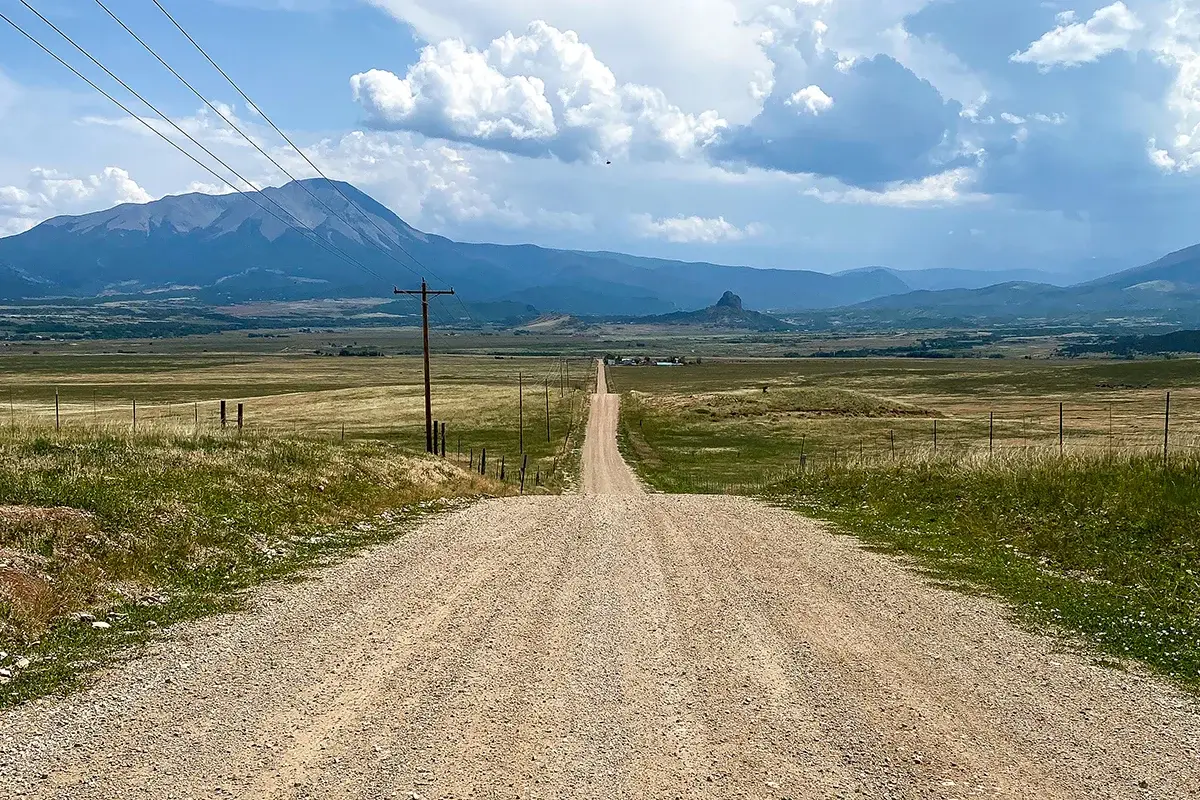
While most co-ops were formed in the 1930s, they still provide power to the more sparsely populated areas of Colorado. “There are areas where we have miles of line serving a single home,” said San Isabel Electric Association Board President Jacque Sikes. “We serve the isolated, rugged areas that investor-owned utilities passed over because our mission is to provide reliable and affordable electricity, not to make a profit.”
“We do everything we can to keep costs down for our members,” Sikes continued. “We budget for main-tenance and upgrade projects, increased power-sup-ply costs, even inflation to some degree. But we can’t predict legislative mandates, which increase our costs, or the weather, which affects how much electricity a co-op sells.”
B IS FOR BOARDS AND BYLAWS
Every electric co-op is run by a board of direc-tors, and every member of an electric co-op has one vote in board elections, regardless of how much electricity they use. Members elect the board of directors who hires the general manager, establishes policies, oversees finances, and makes long-term deci-sions about the cooperative’s future.
Board members aren’t expected to be engineers, but they do have to understand and make decisions about a very complex business with infrastructure valued in the tens of millions of dollars. Most receive training through the National Rural Electric Coop-erative Association. “NRECA does an amazing job with their Credentialed Co-op Director training,” said Michelle Lehmann, a director of Gunnison County Electric Association since 2016.
Directors work with their co-op’s general manager, chief financial officer, and other senior staff to under-stand and make decisions about the organization’s financial resources and needs.
Boards also maintain and evaluate bylaws, the guiding documents for electric co-ops. Bylaws dictate everything from who is eligible for membership and how directors are elected to how meetings are conducted, how votes are cast, and how the cooperative is governed.
C IS FOR COMMUNITY-DRIVEN
Local ownership and control shape every aspect of how co-ops operate. Because the people making decisions are co-op members them-selves, elected by other members to serve on the board, their decisions about rates and other major issues are grounded in concern for their fellow members. As GCEA director Lehmann put it, board members make decisions while knowing “who we’re working for.”
That connection extends well beyond the board-room. The next article in this series will go into more detail on how your co-op’s cooperative principles come to life through local programs, education, and community investment. We’ll look at the creative ways co-ops reach out and engage with members — such as Morgan County REA’s annual member-appreciation picnic. In addition to cooking for and mingling with members, MCREA linemen demonstrate the power of electricity with the co-op’s energized safety display —showcasing dramatic electric arc flashes to underscore the importance of staying away from power lines.
Perhaps nothing illustrates the community-driven nature of co-ops more than the ways in which they put the principle of cooperation among coopera-tives to work. Lehmann, a fourth-generation rancher, compares it to neighbors showing up when someone needs help. When wildfire threatened her family’s cattle several years ago, a neighbor came with horses to help move them to safety.
Electric co-ops operate much the same way, sending line crews to help one another after fires, avalanches, and other disasters. “GCEA received help from other co-ops when we needed it, and our line-men have gone out to help other co-ops recover from fires,” Lehmann said.
For electric co-ops, serving the community isn’t an add-on to the business. It is the reason the business exists.
COMING NEXT MONTH
In October, during National Co-op Month, we’ll explore why the cooperative business model bene-fits members and how the cooperative principles come to life through local programs, education, and community investment. In Part 3, we’ll examine how electric cooperatives differ from investor-owned and municipal utilities — and why those differences matter to members.
The Seven Cooperative Principles
1. Open and Voluntary Membership
2. Democratic Member Control
3. Members’ Economic Participation
4. Autonomy and Independence
5. Education, Training, and Information
6. Cooperation Among Cooperatives
7. Concern for Community
Photo by Joseph Rouse \ iStock / Getty Images Plus via getty images
Jim Hight is a writer, research analyst, and consultant based in Buena Vista.