
RTO partnerships help electric co-op consumers
There’s a certain kind of news that makes energy insiders light up and leaves everyone else wondering what we’re so excited about. The expansion of the Southwest Power Pool into the West falls squarely into this category.
For most people, “power pool” might conjure images of Olympic swimmers doing laps, not a network of utilities coordinating the flow of electricity across multiple states. But for those who follow how the grid works, this expansion is a win for consumer-members of Colorado’s rural electric co-ops. Few people are more excited about it — or more entitled to stand on the medal podium — than Duane Highley, CEO of Tri-State Generation and Transmission Association.
Highley has advocated for integrating Rocky Mountain utilities with neighboring regions since his arrival at Tri-State in early 2019. Before coming to Colorado, he led a large Arkansas cooperative power supplier, saw firsthand the benefits of being part of SPP, and realized the value of expanding it westward — and not just for his Arkansas co-op but for every utility then belonging to the network and those who would join with such an expansion.
“The bigger [the power pool] is and the more participants there are, the greater the benefits,” Highley said on Tri-State’s Western Watts podcast recently.
Since 2019, the not-for-profit power supplier serving 39 electric distribution co-ops and public power districts across four states, Highley, and others have worked steadily to advance the transition.
The effort got a boost in 2021 when Colorado lawmakers required electric utilities to join organized wholesale markets by 2030. A follow-up study by the Colorado Public Utilities Commission estimated potential savings of $230 million annually statewide, including about $20 million for Tri-State.
Much of those savings will come from expanded access to lower-cost power. “We’re able to buy energy at lower costs from power plants across the region,” said Highley. And even larger savings can manifest in the future with SPP coordinating long-term planning with all its member utilities.
WHAT IS AN RTO?
Organized wholesale markets operate across most of North America and are run by regional transmission organizations, or RTOs. Highley likens them to air traffic controllers: They don’t own the planes but direct traffic safely and efficiently.
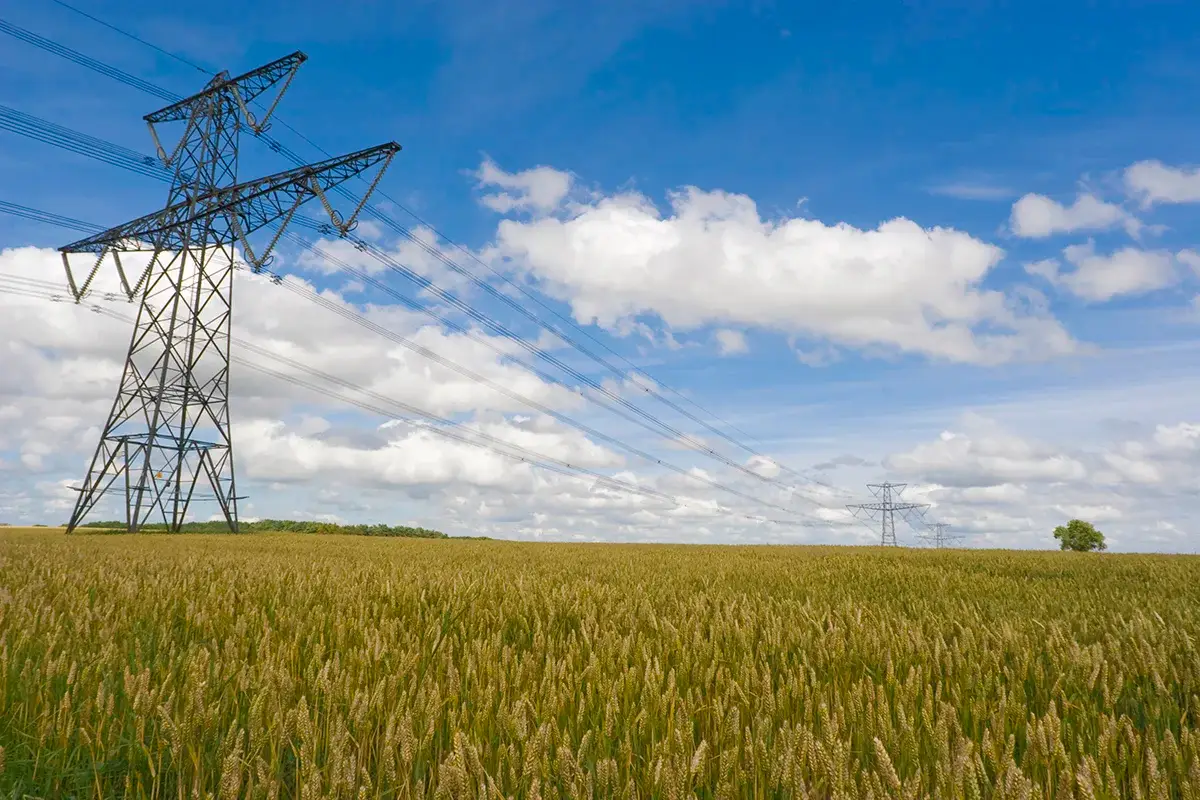
RTOs have grown in importance since the wave of restructuring that broke up many monopoly investor-owned utilities in the 1990s. They play key roles in pricing wholesale electricity that travels on high-voltage transmission lines, coordinating power flows, and planning new transmission. They’re widely seen as neutral operators that help utilities work together more efficiently.
But Colorado and neighboring states had been behind the rest of the country in participating in an RTO — until now. Highley noted that utilities to the east and west had linked up in RTOs years before.
Electric utilities don’t need RTOs to buy and sell electricity to one another. In fact, Tri-State had, for years, been in what’s known as an electric imbalance market that allowed real-time exchanges of electric power with neighboring utilities. “It’s an instantaneous market designed only to optimize what [generation resources] you currently have online,” according to Highley.
By comparison, an RTO offers much greater opportunity to save money by using regional power plants and transmission lines in the most effective manner. “Think of it as replacing a patchwork of toll roads with an efficient, well-planned interstate highway system, but for electricity,” Highley explained in a Colorado Sun guest opinion piece last year.
CONCERNS STILL WEIGHING
But even after the upbeat PUC report, challenges remained before Tri-State could formally join SPP’s western network; a small portion of its territory in Nebraska and eastern Colorado has long been part of SPP. Along with the positives, the PUC flagged concerns, including reduced state control over some decisions and potential complications for Colorado’s greenhouse gas reduction goals if more power is imported from higher-emission sources.
Highley acknowledges the trade-offs and described Tri-State’s board as “excited and at the same time nervous.” Some costs — especially for new transmission — may rise initially. But he expects long-term benefits from more-efficient regional planning.
“We’re working now for the best benefits for the entire region,” he said, adding that he believes the network effects of a larger system will outweigh the loss of some direct control.
Six other utilities joined SPP alongside Tri-State, and Highley hopes the network continues to grow.
WHAT ABOUT POWER RATES?
Will the SPP expansion mean lower electricity rates for consumer-members of electric co-ops in Colorado? It’s hard to say at this point, but it will likely translate into more stable rates — that is, rates staying the same for longer or not going up as much as they would if Tri-State didn’t become part of the SPP.
Will it mean fewer power outages during storms or wildfires? Probably not, since Tri-State manages the high-voltage bulk transmission system and most outages in Colorado are caused by damage to the distribution infrastructure. But it will better equip Tri-State to keep the electrons flowing if a disaster knocks out parts of its infrastructure.
Highley points to the 2021 Winter Storm Uri in Texas, which led to rolling outages when the Texas grid was overwhelmed by electric heating demand and generators that failed during the unusually cold period. Texas has an RTO known as ERCOT, but it’s almost a power island with little capacity to import electricity from neighboring states during such times. These outages “would not have occurred had there been another 1,000 megawatts of transfer capability,” he said, citing a recent report.
MORE, NOT LESS, RENEWABLE POWER
And what about those greenhouse gases? According to Highley, being part of SPP will enable Tri-State — and the 39 distribution co-ops and public power districts it serves — to use more renewable power more effectively. “Intermittent [energy] sources like wind and solar require flexibility,” Highley wrote in his Colorado Sun op-ed. “That’s what a regional transmission organization provides. By pooling resources and balancing them over a wide geographic area, the organization can better handle the variability of renewable power,” he wrote. “The RTO does this while helping us track our emissions and helping us meet reporting requirements.”
CALIFORNIA OR SPP?
A final decision was choosing between SPP and the California Independent System Operator. The PUC concluded CAISO’s governance could favor California’s interests at the expense of other participants. Highley concurred, noting SPP’s democratic governance model.
“At SPP, every member utility and every state regulatory commission has a voice,” said Highley. “There are 200 people in the room for a board meeting.” Also, being closer to other SPP members than to California and having participated in SPP’s eastern territory gave Highley and Tri-State’s board confidence that it would be the better RTO to join.
“This sounds technical and wonky, and it is,” Highley summed up in his Colorado Sun article. “But the heart of the matter is … utilities are working smarter together as members of SPP to deliver electricity more reliably and affordably to people across parts of Colorado, Wyoming, Nebraska, New Mexico, and beyond.”
Jim Hight is a writer, research analyst, and consultant based in Buena Vista, Colorado, where he is a grateful member of Sangre de Cristo Electric Association.